About All Tours Boat ToursFrom Medellin ToursPiedra del Peñol ToursHelicopter Ride ToursPrivate Tours Directions Hours & Fees
Find Tours 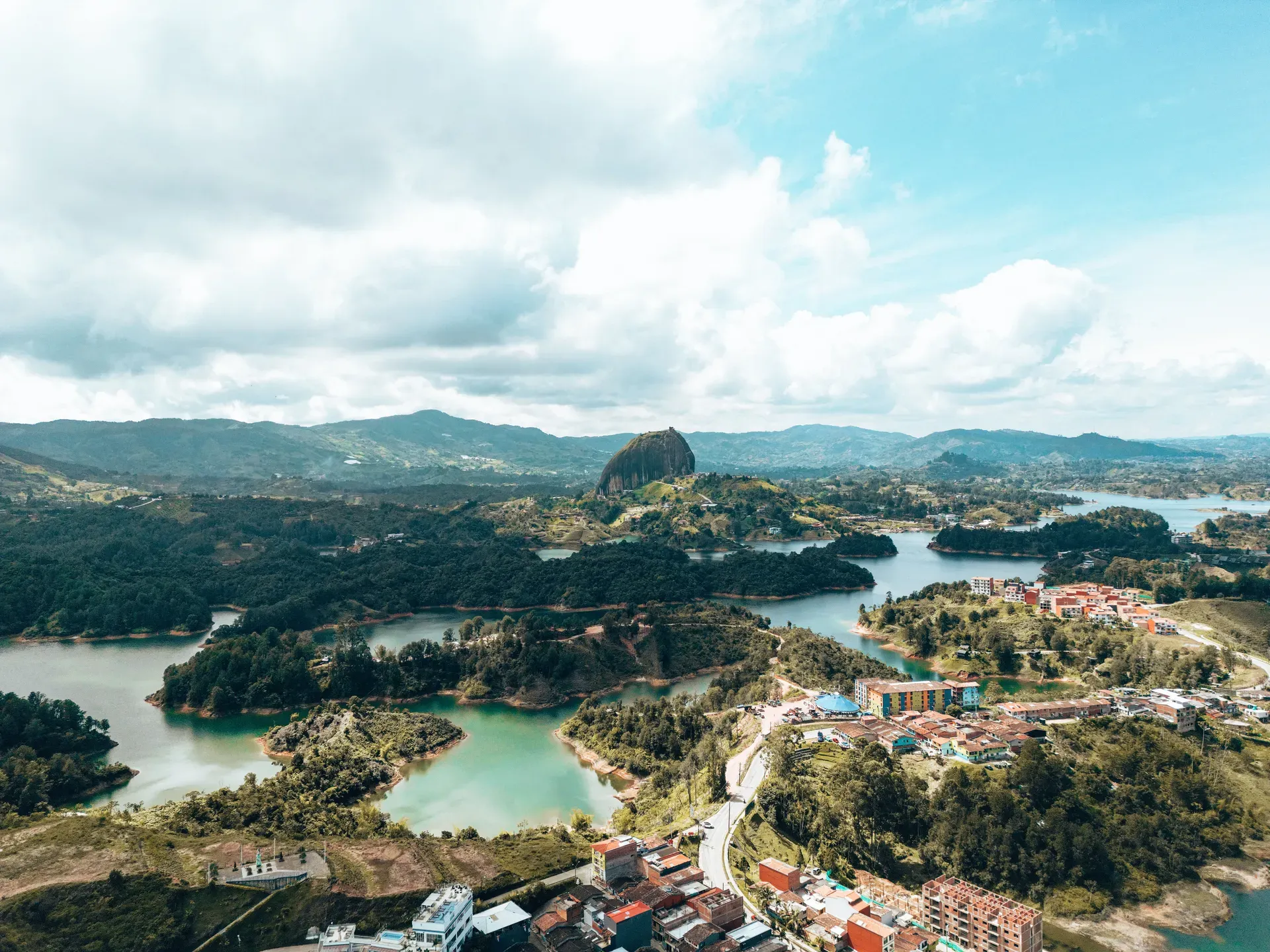
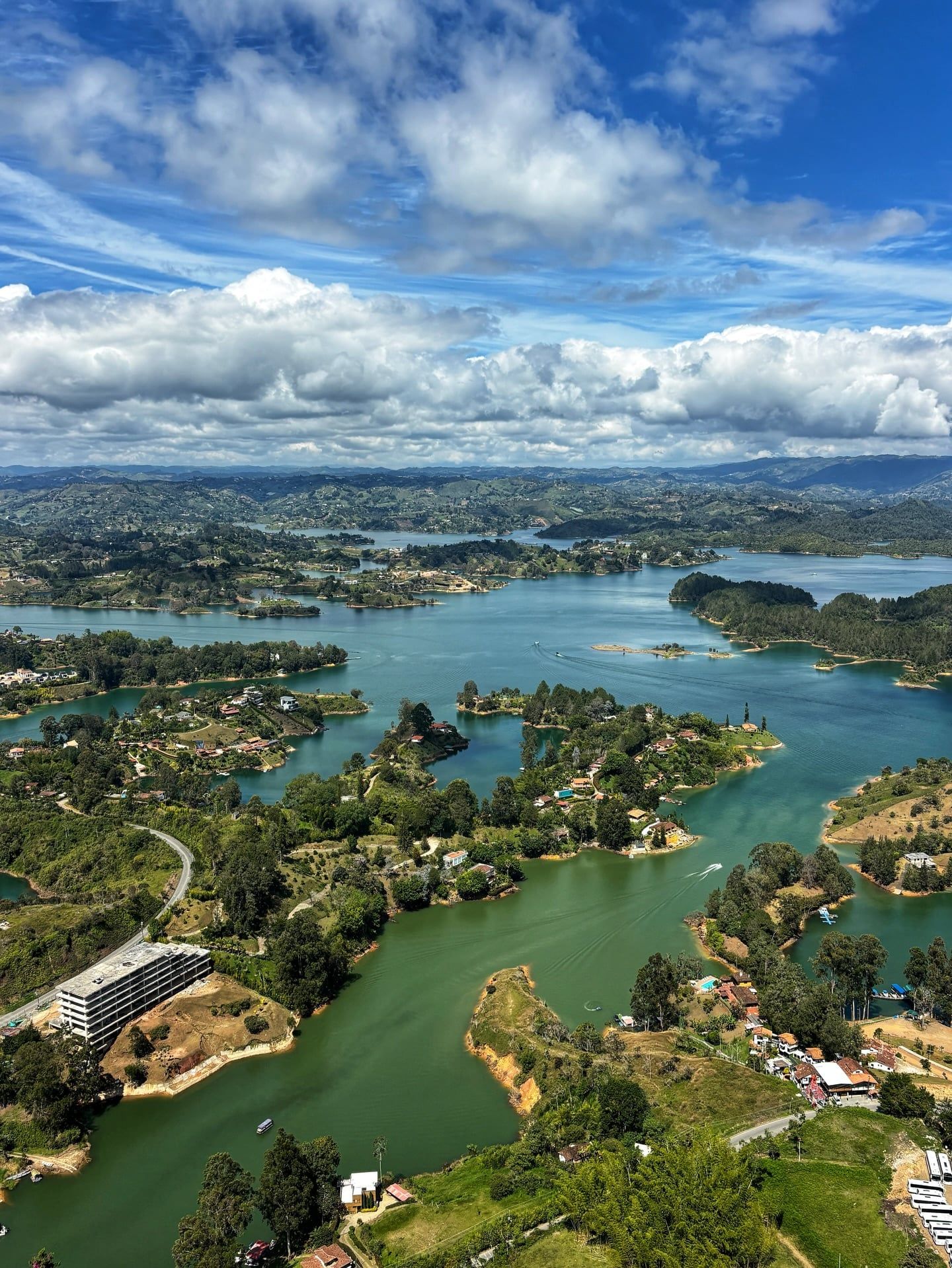
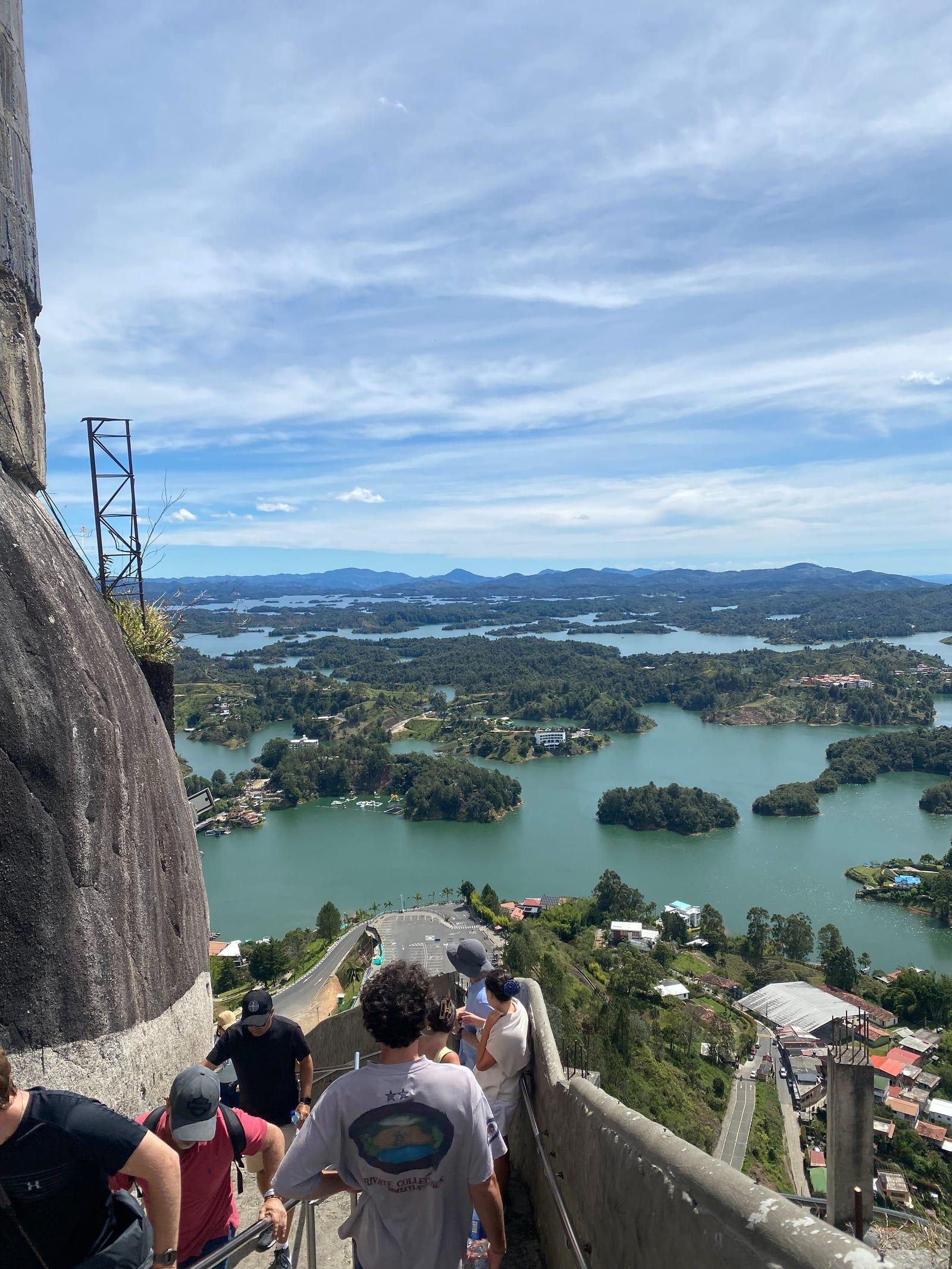
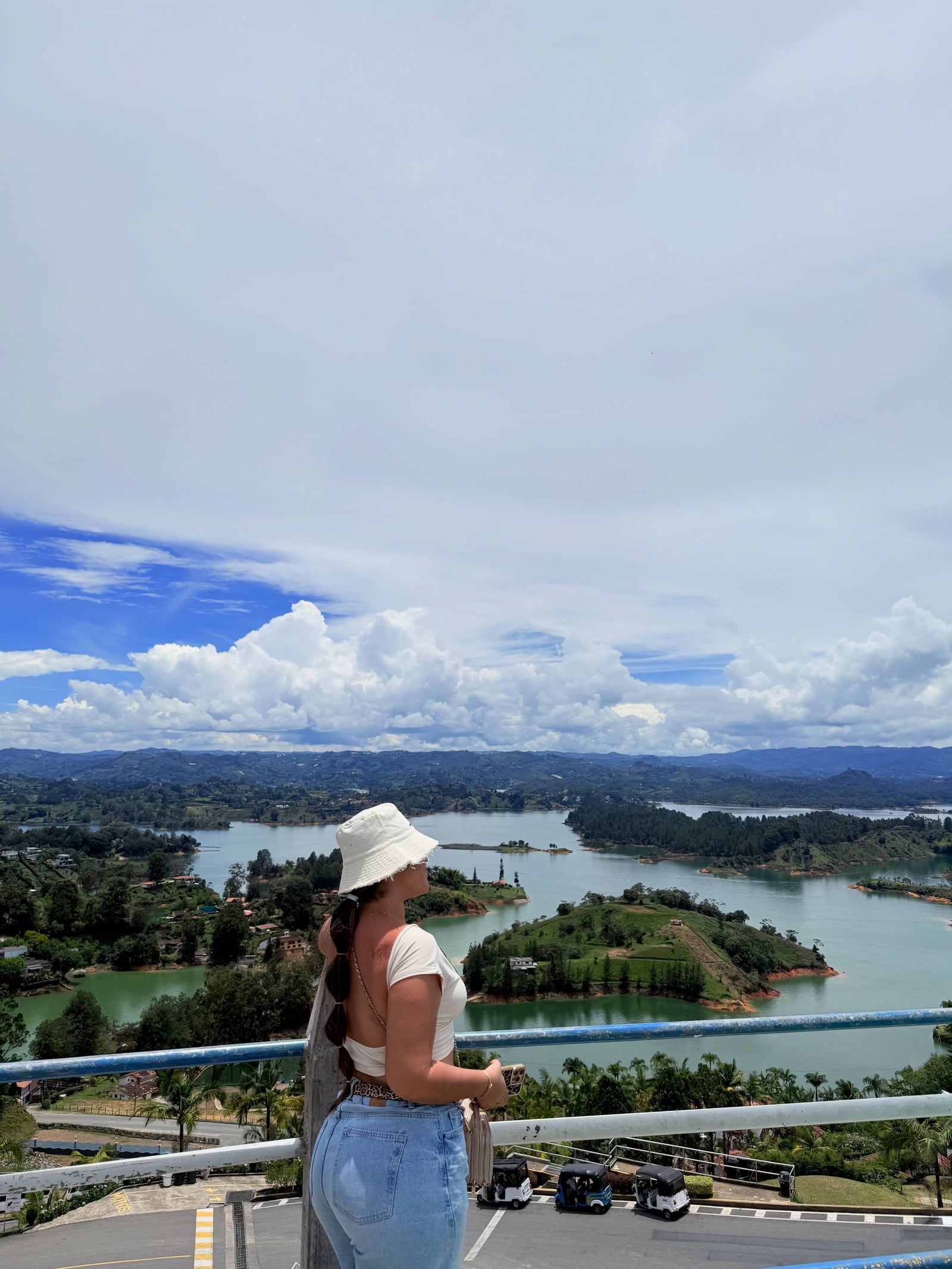
Guatape sits 79 kilometers from Medellín along a massive 1970s hydroelectric reservoir. To see the flooded valley from above, climb the 740 concrete steps of the 220-meter granite monolith known as La Piedra del Peñol.
Find Guided ToursGuatapé is a colonial town in the Eastern subregion of the Antioquia Department, Colombia. Located 79 kilometers (49 miles) northeast of Medellín, the municipality sits in the Andes at an elevation of 1,890 meters (6,200 feet). The physical landscape features rolling hills, green valleys, and a vast artificial reservoir system.
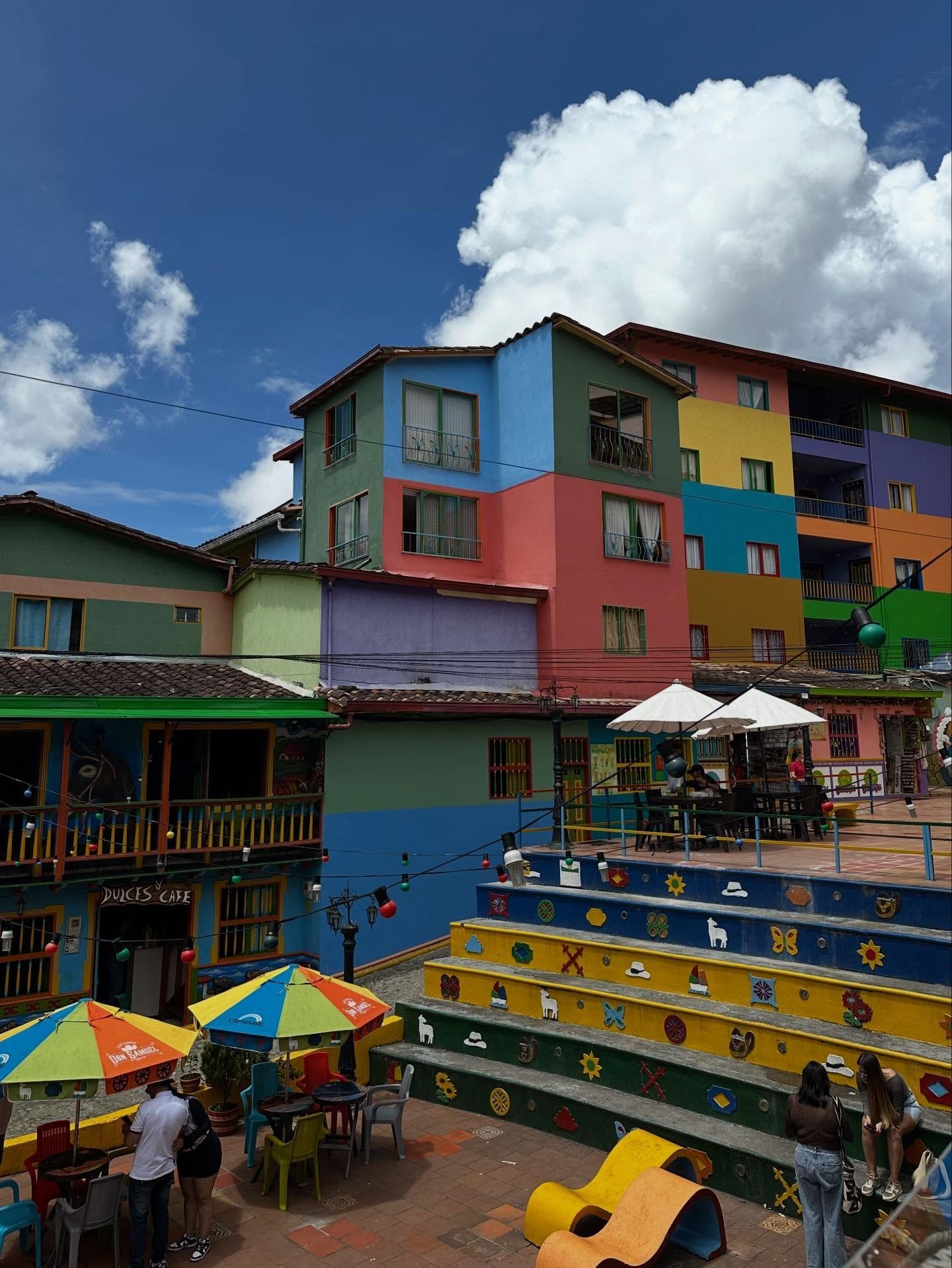
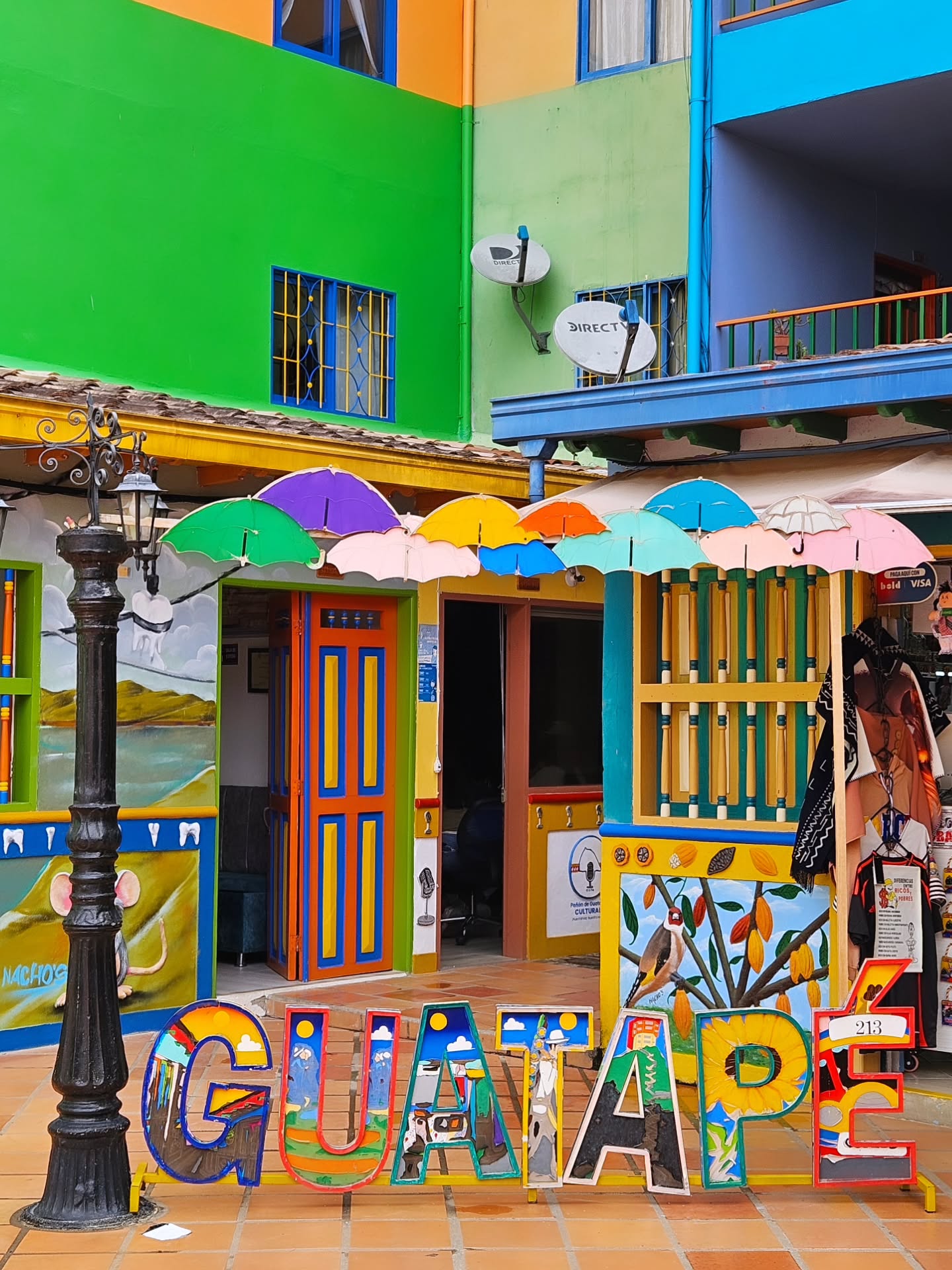
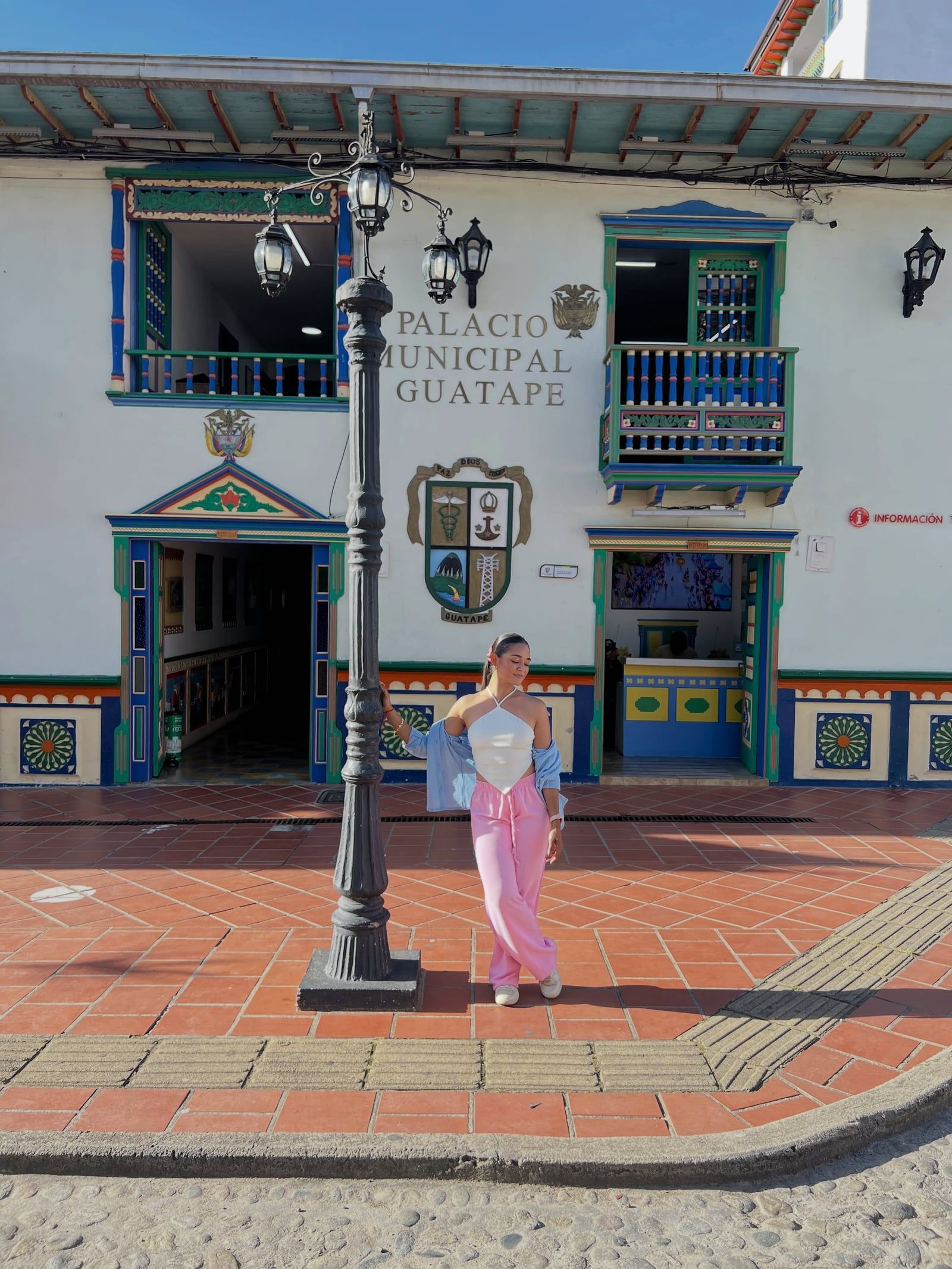
The local architecture stands out due to its zócalos. These are hand-painted bas-relief tiles decorating the lower walls of buildings throughout the streets. Popularized in the 1910s, the tiles depict community heritage, historical events, agricultural scenes, and the specific trades of the homeowners.
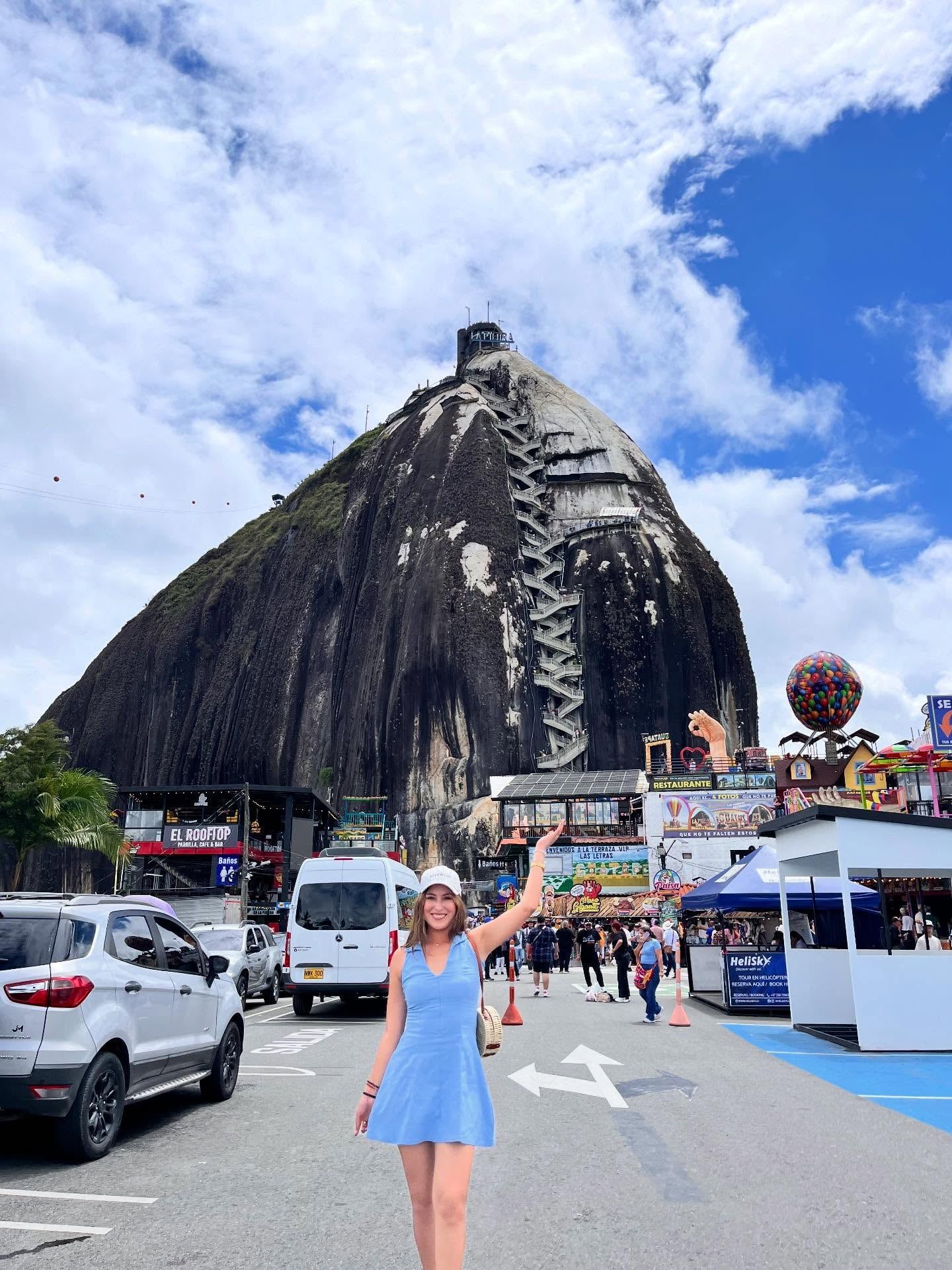
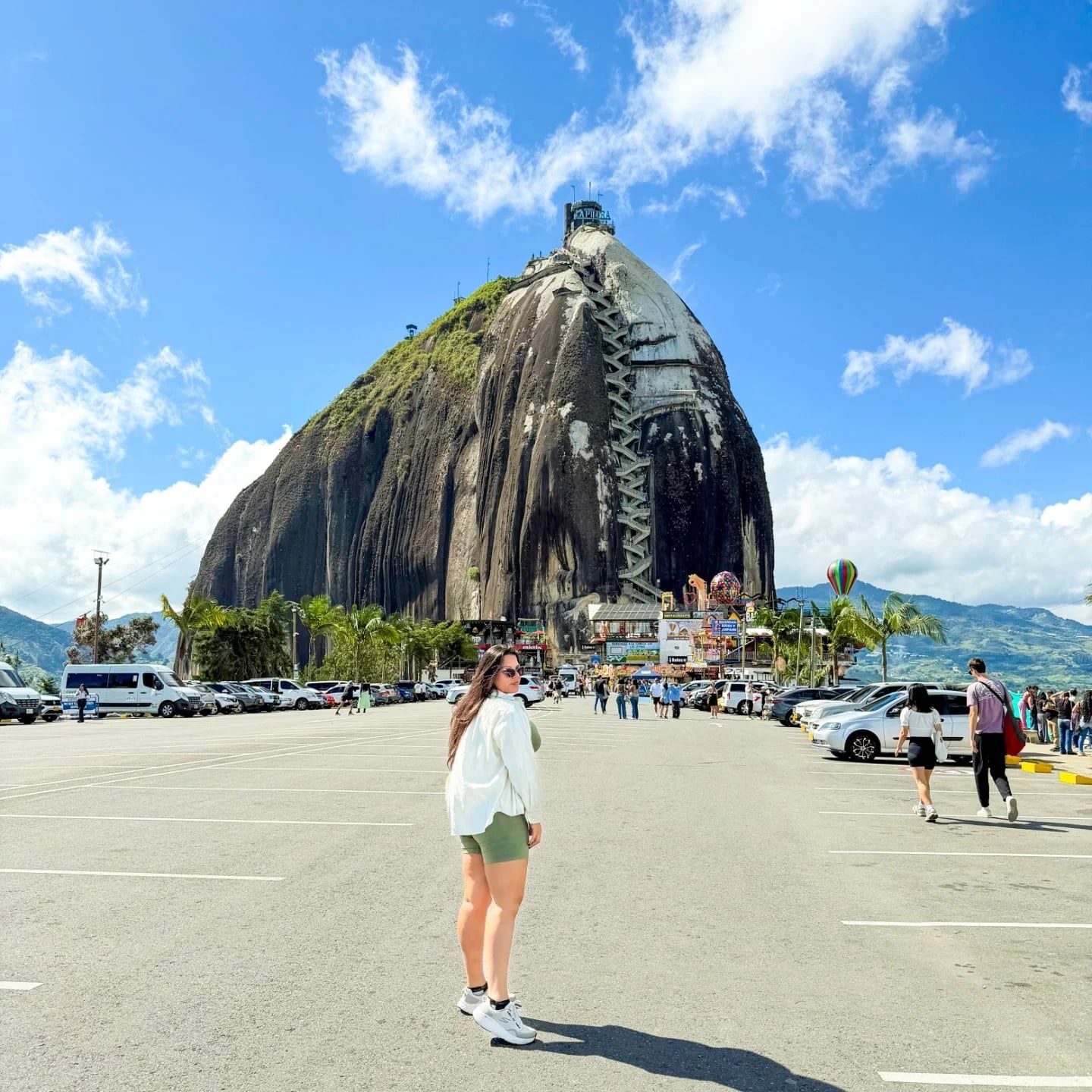
Rising above the man-made reservoir is El Peñón de Guatapé, a 65-million-year-old granite monolith. The 220-meter (720-foot) rock formation has two-thirds of its mass below ground. Long before Spanish colonization, the indigenous Tahamí people inhabited the region and worshipped the giant stone, calling it 'mojarrá'. The town itself takes its name from an indigenous chief named Guatapé, which translates to "stones and water" in Quechua.
Spanish settler Don Francisco Giraldo y Jimenez officially founded the town on October 4, 1811, and it became a municipality in September 1867. A century later, Guatapé underwent a drastic physical and economic transformation. In the 1970s, Empresas Públicas de Medellín constructed a massive hydroelectric complex. This project flooded the original agricultural lands and parts of the old town, forcing residents to relocate. Consequently, the local economy shifted toward tourism, now drawing approximately 500,000 annual visitors to climb the 740 steps to the summit of the iconic rock.
Discover the full history and cultural significance on our About page.
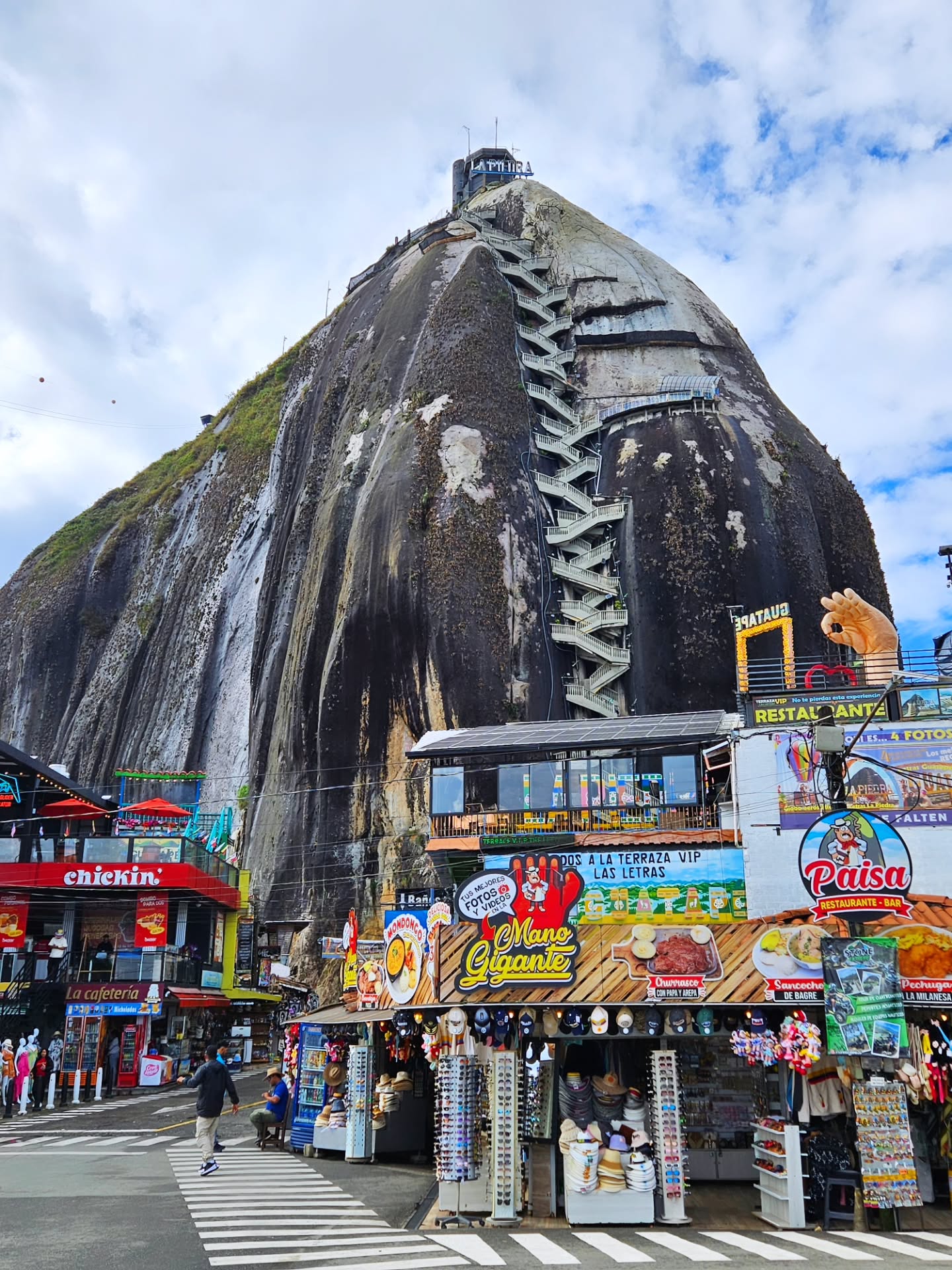
The climb takes up to two hours round trip. Ascend the 740 numbered steps built into this 65-million-year-old, 220-meter granite monolith. The zigzagging staircase passes a shrine to the Virgin Mary before opening to a 360-degree panoramic view of the vast reservoir.
Walk down Calle del Recuerdo to examine original hand-painted bas-relief tiles preserved from before the 1970s hydroelectric flooding. These lower-wall designs depict local trades and agricultural heritage. Visitors can also sit on the painted steps in the Plaza de los Zócalos to drink Colombian coffee.
Navigate the massive artificial lake created by a 1970s hydroelectric project. Cruising past green peninsulas on a boat tour, you will see the ruins of La Manuela, Pablo Escobar's former estate bombed in 1993. The water provides relief from the afternoon heat, averaging 24 degrees Celsius.
Order a plate of Trucha Frita at a waterfront restaurant. Caught directly from the reservoir, the fresh fish is fried until crispy. It arrives with traditional Paisa sides like rice, beans, salad, avocado, and plantains. Dining at 1,890 meters above sea level provides scenic lake views.
Hand-picked tours with free cancellation and verified reviews
 Free Cancellation
  Free Cancellation
  Free Cancellation
  Free Cancellation 10h
  Free Cancellation 11h
  Free Cancellation
  Free Cancellation
  Free Cancellation 11h
 The ideal times to visit Guatapé are January and the period from June through September. During these months, the weather is highly favorable for outdoor water sports and climbing the 740 steps of La Piedra del Peñol.
These are the rainiest months of the year, making outdoor activities difficult. Heavy downpours create highly slippery and hazardous conditions on the 740 concrete stairs of the monolith.
This period offers highly favorable weather that is neither too hot nor too cold. Conditions are ideal for climbing La Piedra and enjoying water activities on the reservoir.
September provides excellent weather for sightseeing, but October and November shift into the rainy season. Frequent afternoon downpours disrupt outdoor plans and make the steep rock climb hazardous.
January is a peak month to visit, featuring favorable weather with average afternoon temperatures around 24 degrees Celsius (75°F). This provides safe, comfortable conditions for exploring before nighttime cooling.
La Piedra del Peñol operates daily from 8:00 AM to 5:00 PM, with the ticket office and gates functioning within these times. Certain sources indicate the site occasionally remains open until 6:00 PM. Exploring the town center of Guatapé is free and requires no official entry, remaining accessible at all hours.
| Category | Price |
|---|---|
| General Admission (Adults and children over 1 meter tall) | COP 18,000 to COP 20,000 (approx. $4.50 to $5 USD) |
| Online Skip-the-Line Ticket | COP 59,000 ($18 USD) |
No advance reservations are required to climb La Piedra del Peñol. The on-site ticket office strictly accepts Colombian Pesos (COP) in cash. Credit cards, debit cards, and US dollars are not accepted at the gate. Skip-the-line tickets can be booked online via WhatsApp or email.
For complete schedules and ticket prices, visit our Hours & Fees page.
Guatapé is located 79 kilometers (49 miles) northeast of Medellín. Visitors can reach the municipality by taking a direct bus from the city center or hiring a taxi from the international airport.
Buses to Guatapé depart every 30 minutes from Terminal del Norte in Medellín. This terminal connects directly to the Caribe Metro Station on Line A. Passengers purchase tickets at booth number 14 from the operator Sotrasanvicente & Guatape La Piedra. You can choose to disembark at the El Peñol rock stop or continue into the main town.
Taxis are readily available directly outside the José María Córdova International Airport terminal. This route provides a convenient door-to-door transfer without navigating through the Medellín city center. The drive is highly scenic and much faster than public transit options. Travel time depends heavily on current traffic conditions along the mountain roads.
For detailed transport options and routes, visit our Directions page.
Plan to climb the 740 steps of La Piedra del Peñol between 7:00 AM and 9:00 AM. This timing helps you avoid heavy crowds and the midday heat. Afterward, head to Calle del Recuerdo before 9:30 AM. You will capture photos of the historic zócalos without day-trippers blocking the view.
The ticket office at La Piedra del Peñol strictly requires cash for the COP 18,000 to 20,000 admission fee. They do not accept credit cards or US dollars. You will also need local currency to pay for tuk-tuk rides and public buses. Always withdraw enough cash before arriving.
Buses back to Medellín depart every 30 minutes and cost between COP 14,000 and 17,000. These seats fill up rapidly, particularly on weekends and public holidays. Purchase your return fare at booth 14 as soon as you arrive in town. This guarantees your spot and prevents you from getting stranded.
Guatapé sits at an elevation of 1,890 meters, making the equatorial sun exceptionally intense. Apply high-quality sunscreen and wear a hat to prevent severe burns. You should also pack a waterproof jacket in your daypack. Sudden afternoon thunderstorms frequently occur during the rainy months from March through May.
The 740 concrete stairs leading up the 220-meter monolith become extremely slippery during afternoon downpours. Flip-flops are highly discouraged for this hike. Wear practical tennis shoes or strapped sandals to maintain your grip. Always hold onto the safety handrails as you ascend the steep zigzagging path.
Swimming is strictly prohibited in the vast majority of the reservoir. Stick to approved water sports like kayaking or taking a boat tour. Additionally, avoid drinking tap water to prevent severe stomach illnesses. Always purchase bottled water or ensure your hotel provides filtered water during your 1 to 2-day stay.
This municipality provides a natural escape where travelers can take a traditional cocoa tour to learn about chocolate processing. You can also hike to crystal-clear waterfalls and swim in pristine rivers far from the main tourist areas.
As the sister town to Guatapé, El Peñol holds deep historical significance tied to the 1970s hydroelectric flooding. Visitors can explore the relocated settlement and view a replica of the old flooded church to understand the community's resilience.
Located on the shores of the reservoir, this ruined mansion was bombed and destroyed in 1993. Touring the site by boat provides a sobering look into Colombia's complex history and the dramatic contrast between the past and present.
Read what travelers share about their experience visiting Guatape — from practical tips to personal highlights.

Admission to climb La Piedra del Peñol costs between COP 18,000 and COP 20,000 (about $4.50 to $5 USD) for a self-guided climb. You must pay in cash using Colombian Pesos, as US dollars and credit cards are not accepted at the ticket office. Alternatively, online skip-the-line tickets can be purchased for $18 USD or COP 59,000.
Direct buses depart every 30 minutes from Medellín's Terminal del Norte, which connects to the Caribe Metro Station on Line A. The journey covers 79 kilometers and takes approximately two hours, with one-way tickets costing between COP 14,000 and COP 17,000. Passengers should purchase tickets at booth number 14 from the operator Sotrasanvicente & Guatape La Piedra.
The rock is open to visitors daily from 8:00 AM to 5:00 PM, with some sources indicating the gates stay open until 6:00 PM. To avoid heavy crowds and the midday heat, plan to arrive early in the morning.
There are 740 numbered concrete steps built into the side of the 220-meter granite monolith. Climbing to the summit and returning to the base typically takes 1.5 to 2 hours round trip.
Wear comfortable clothing and secure footwear like tennis shoes or strapped sandals, as the stairs can become highly slippery during rain. Since the town sits at an elevation of 1,890 meters, the sun is intense, so bring high-quality sunscreen, sunglasses, and a wide-brimmed hat. Always carry Colombian Pesos in cash since many local vendors do not accept cards.
No advance reservations or permits are required to enter La Piedra del Peñol. You can buy tickets directly at the base upon arrival. If you prefer to skip the line, you can book tickets online via WhatsApp or email.
Wheelchair accessibility is highly limited due to the town's hilly terrain, cobblestone streets, and steep slopes. The climb up La Piedra del Peñol is entirely inaccessible for wheelchair users because it consists of 740 narrow stairs. However, the flat waterfront malecon and certain central areas can be navigated with assistance.
The best months to visit are January and from June until September when the weather is favorable for climbing and outdoor water sports. Avoid traveling from March through May and October through November. These are the rainiest months, which can make the steep stairs of the rock hazardous and slippery.
Browse verified tours with free cancellation and instant confirmation.
Find Tours